Week 3 — Eat the Rainbow
Week 3 — Eat the Rainbow
We’re going to build on the strong start you’ve made — moving further away from those instant glucose spikes. You now start the day with protein and eat a wider variety of plants. This has kick-started your body’s natural rhythms where fat is used, not stored.
Keep up your pulse-based meals, and now expand your range with colourful vegetables, fruits, herbs, and spices. Different plant colours come from natural compounds that help your body stay in tune — supporting your gut, mood, and metabolism.
Think of it as eating for diversity, not dieting for deprivation. The tastes are amazing.
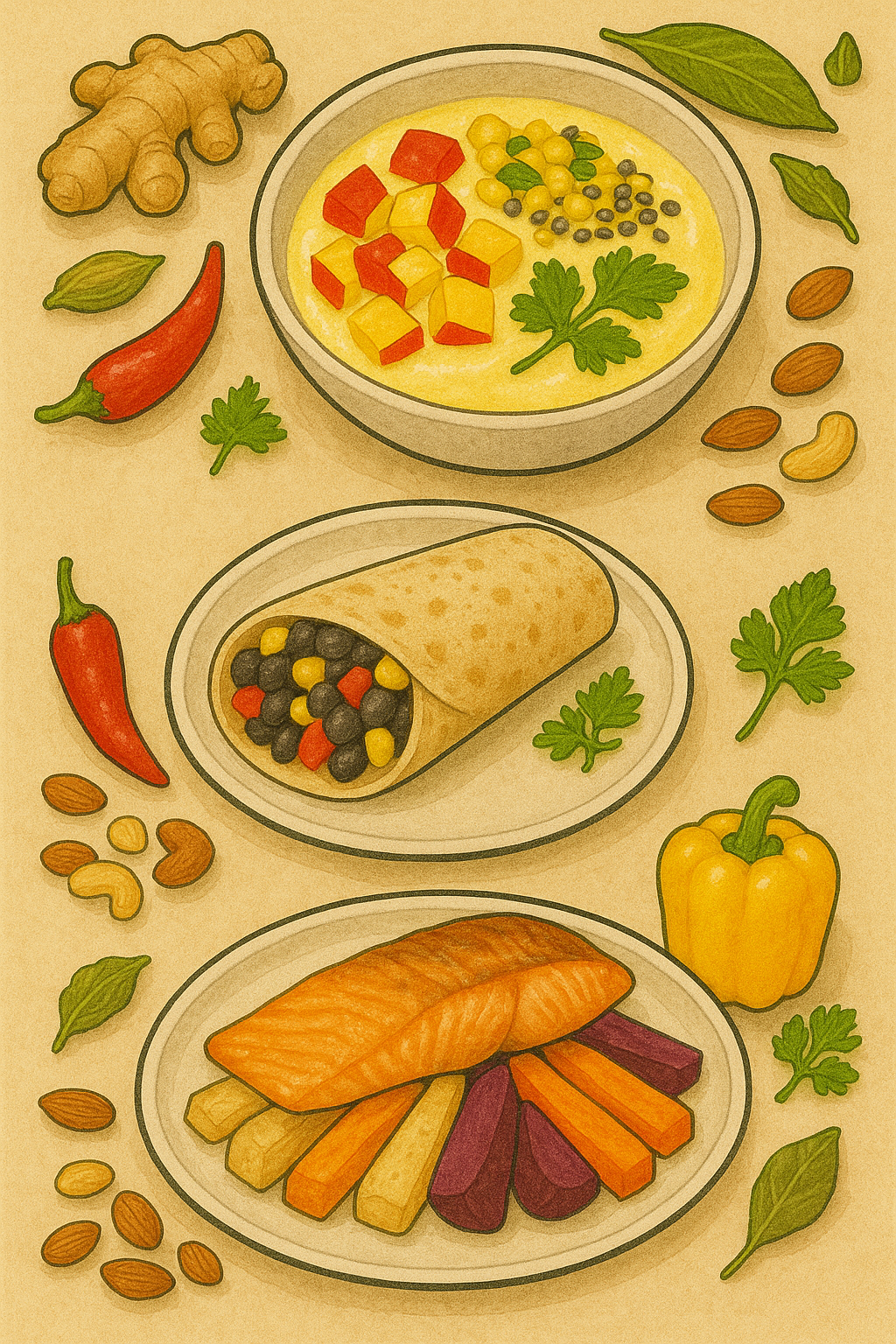
Your goal this week
- Add at least three colours to every meal. Small portions count.
- Include three different fruits across the week — breakfast or dessert.
- Add two new herbs or spices you don’t normally use.
- Keep your protein breakfast and pulse meals from earlier weeks. This plan builds in layers, not swaps.
Why it works
The main goal this week is to keep insulin steady. Different plant colours bring different fibres and natural compounds, which together slow digestion and smooth out energy release. That means fewer spikes and crashes — hunger signals arrive later, you naturally eat less, and your body stops flipping into “fat-storage mode”. Once insulin levels settle and then drop, fat burning switches back on.
Meanwhile, the colourful polyphenols in these plants feed your gut microbes, helping them produce compounds that support better blood-sugar control, mood, and immunity — all covered in more detail in Better Eating.
Shopping list
Pick a mix of colours you enjoy — fresh, frozen, or tinned are all fine.
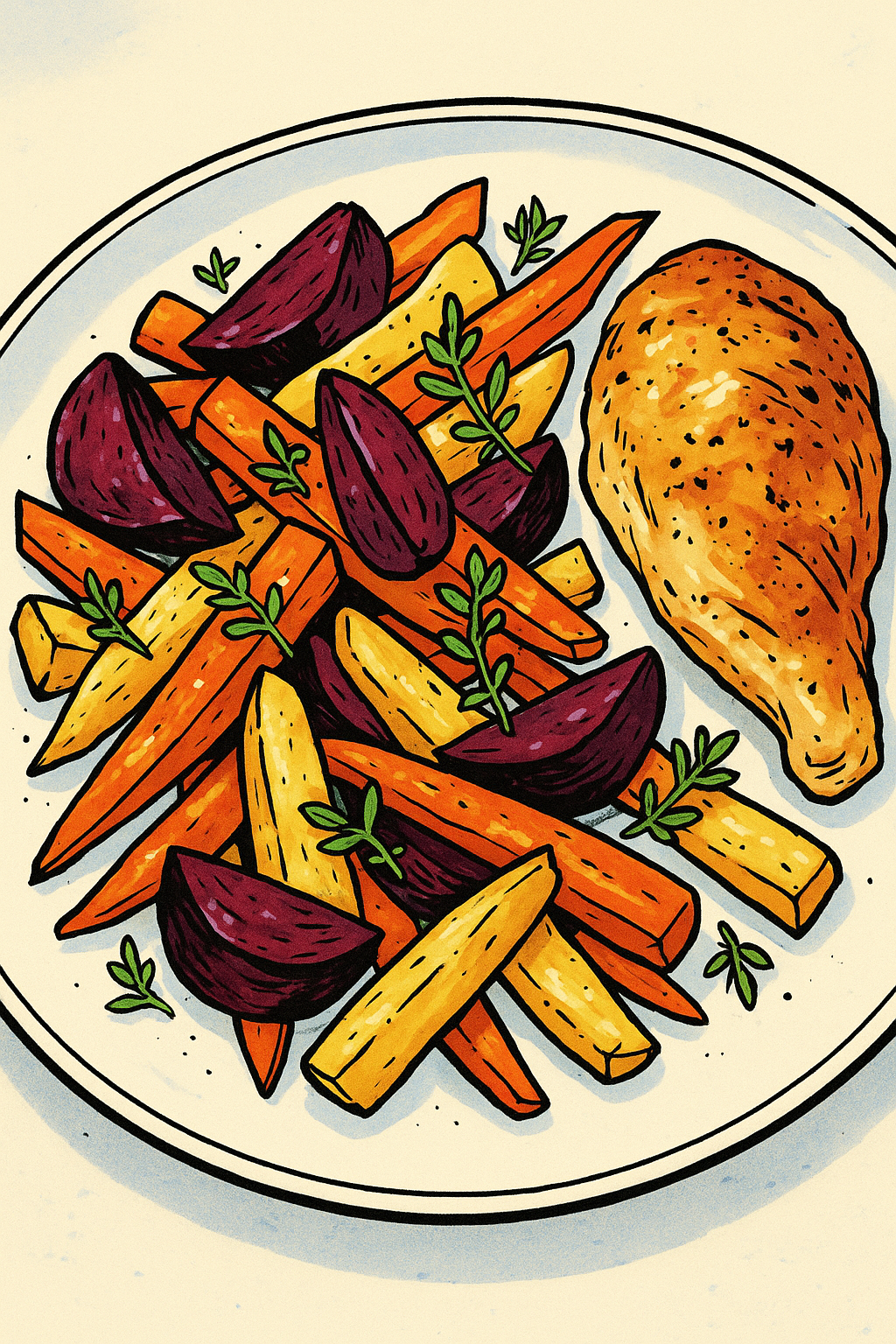
For Dinner 1 – Roast Roots
- Beetroot, parsnip, carrots
- Garlic (3–4 cloves)
- Fresh thyme and rosemary
- Olive oil
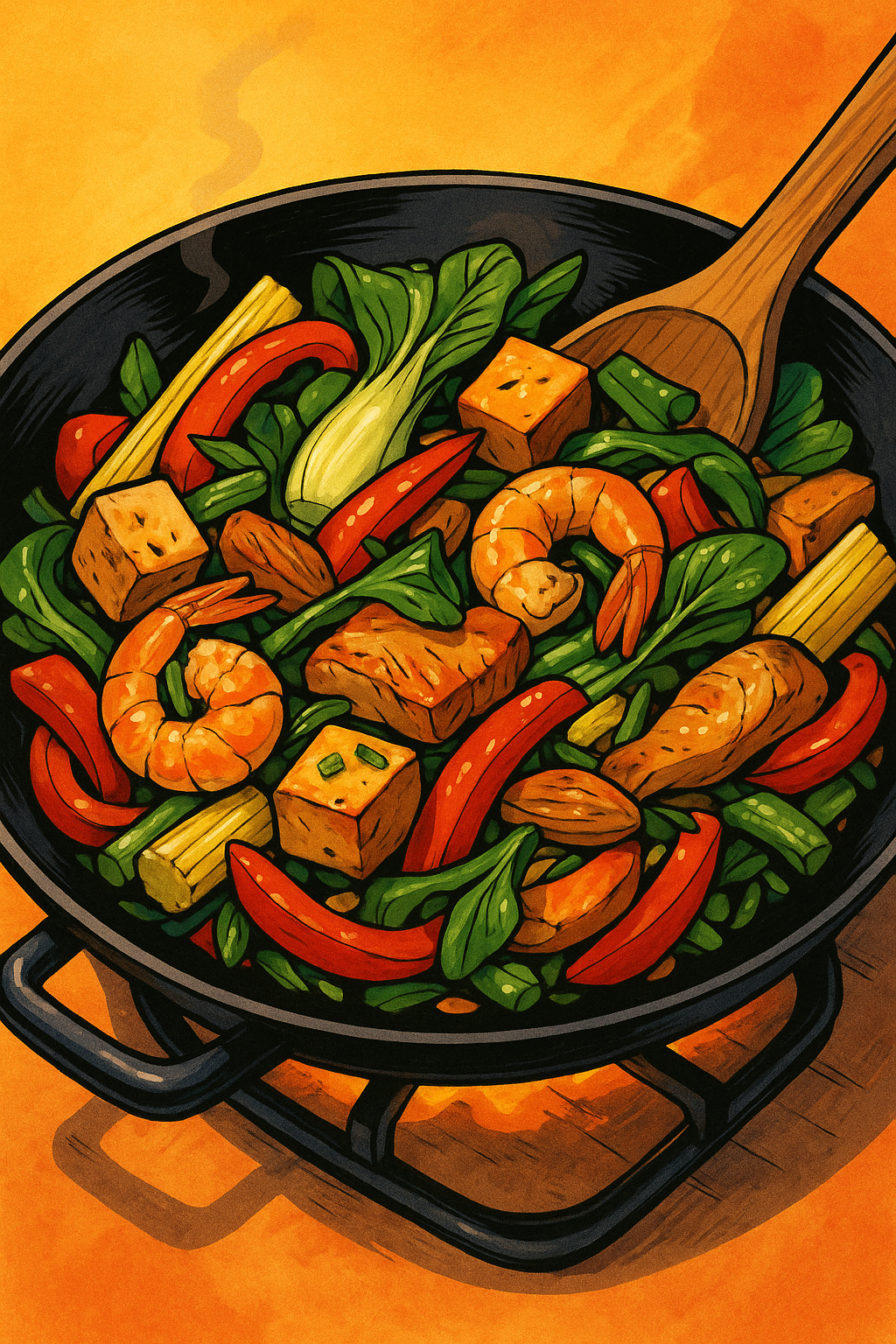
For Dinner 2 – Thai-Style Stir-Fry
- Red peppers
- Yellow baby corn
- Green pak choi (bok choy) or spinach
- Garlic and ginger
- Lime
- Soy sauce or fish sauce
- Chilli flakes, lemongrass, coriander seed or fresh coriander, kaffir lime leaf, turmeric or galangal
- Optional protein: tofu, prawns, or lean chicken
A quick note:
There’s a lot of herbs and spices listed here — you don’t need to buy them all in one week. They’re ideas, not rules. If you can’t find kaffir lime leaf, no problem — a stir-fry with chilli and lemongrass is delicious on its own, especially if it’s new to you.
When you’re in the shops, take a few minutes to explore. While supermarkets are overflowing with processed foods, the fruit and veg section is often the most inspiring place in the building. If you see something you don’t recognise — Google it. That’s how we discovered kaiki fruit, and it’s become a new favourite. You might find one too.
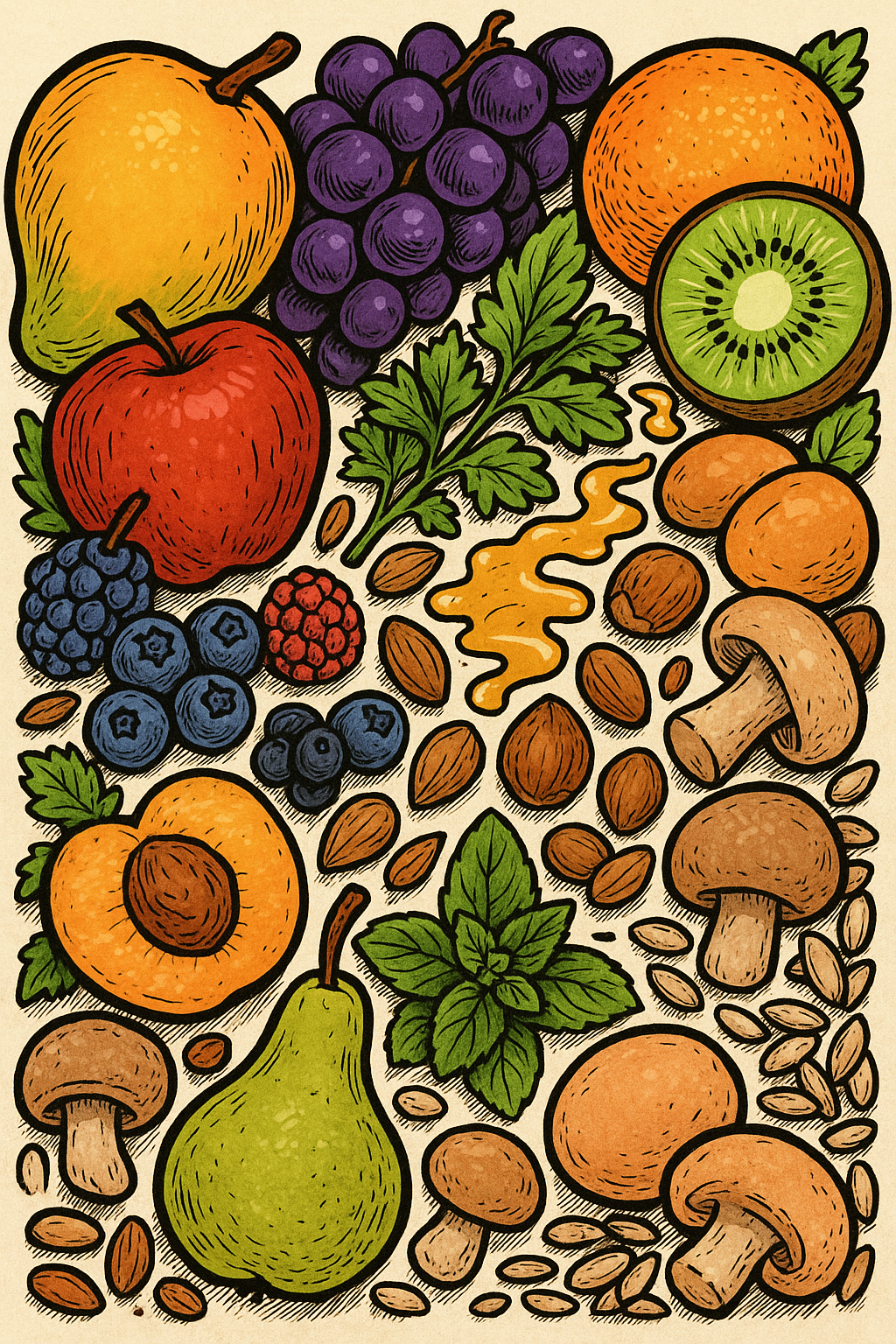
Fruits & Extras
- A mix of red/purple (berries, grapes, plums), orange/yellow (mango, peach, apricot), and green (apple, kiwi, pear)
- Honey and sunflower seeds for dessert toppings
- Fresh herbs: parsley, basil, or mint — dry is fine too
- Nuts: full of healthy fats and proteins with crunch
- Mushrooms: another layer of diversity, taste, and texture
Simple ideas
Breakfast: Your usual dairy-based bowl (Greek yoghurt, skyr, or cottage cheese) topped with the new fruits you’ve added this week.
After dinner: A small fruit salad with a drizzle of honey and a few sunflower seeds. Sweet enough to feel like dessert, balanced enough to keep blood sugar steady.
Dinner 1 – Roast Roots: Roast your beetroot–parsnip–carrot mix and serve with chicken, fish, or tofu.
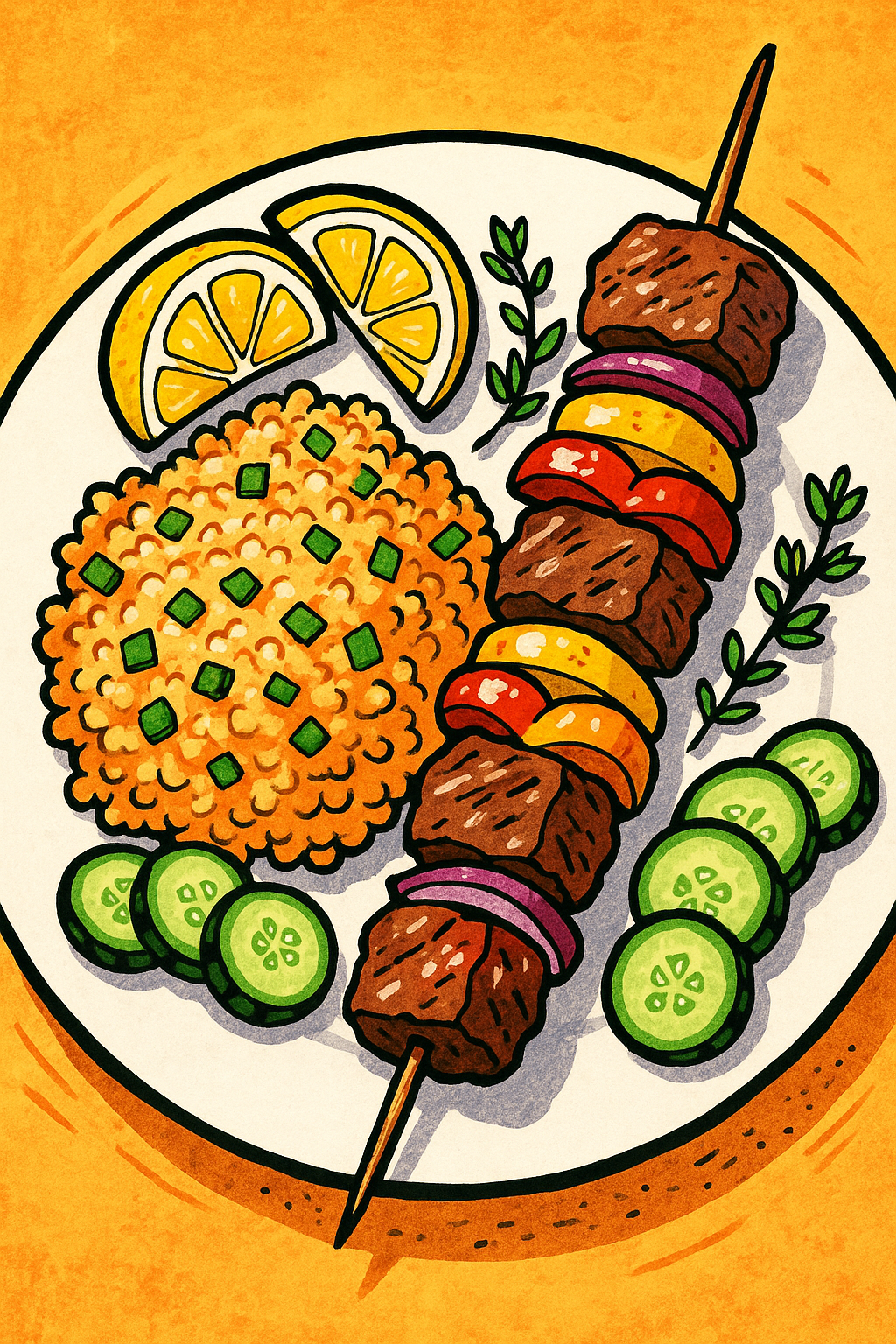
- Dinner 2 – Thai-Style Stir-Fry:
Starter idea: Begin with a small salad — mixed leaves, grated carrot, or cucumber with a squeeze of lemon.
- This adds fibre and colour, and takes the edge off hunger before the main meal. -The use of plants as starters and desserts has another effect: food becomes meaningful again. It takes two minutes to make a small salad, and suddenly dinner stops being an inconvenience — it becomes an event.
Greens and whites: Don’t forget the subtler colours. Replace limp iceberg lettuce with spinach, celery, fennel, or pak choi for deeper greens.
- Whites matter too — try onion, garlic, mushrooms, or even lychees for natural sweetness and extra prebiotic fibre.
Quick kitchen tip
You don’t need a steamer to get perfect greens.
Add about 1 cm (½ inch) of water to a pan and bring it to a boil.
Add pak choi, spinach, or other leafy greens, cover, and cook for just 1–2 minutes — until bright and slightly firm.
Drain well and finish with a drizzle of olive oil or a squeeze of lemon.
This gentle boil keeps flavour, colour, and nutrients — and preserves the mild bitterness that supports digestion and gut balance.
Watch-outs
Don’t feel pressured to overhaul every meal. Start with what you already eat and add colour.
And yes, eat the rainbow — but not Skittles.
Week 4 — Slower Carbohydrates
This week is about driving through to a sustainable diet for healthy living.
We’ll take on one of the biggest modern challenges: reducing fast carbs such as white bread, white rice, and white pasta — and replacing them with slow, flavour-rich alternatives.
It’s okay to admit this might be the hardest week. Those fast carbs are designed to hit the brain’s reward centres — they’re not easy to give up. So don’t try to do it all at once. If a switch to whole grains feels like chewing cardboard, go halfway: mix white and wholemeal pasta, blend white and brown rice, or use half-and-half bread for a while.
Remember, all the work you’ve done so far is paying off. Because you’re now eating more protein and fibre, your body handles sugar differently — even the sugars in a slice of white bread are being slowed down by the fibre and pulses you eat with it.
The goal isn’t perfection — it’s progress that lasts.
Your goal this week
- Replace fast with slow carbs. Wholegrain rice, quinoa, oats, and lentil-based dishes are your new base.
- Keep the colour and fibre from previous weeks — don’t drop what’s working.
Why it works
White, refined carbs break down almost instantly into glucose, flooding your system and triggering a big insulin response.
By shifting toward whole and blended grains, digestion slows, insulin rises more gently, and energy lasts longer.
That steady release means fewer cravings, less fat storage, and a calmer appetite.
And thanks to the extra protein, pulses, and fibre you’ve already introduced, your metabolism can now handle these changes smoothly — you’ve built the foundation for success.
Shopping list
Keep it short and practical.
Grains & bases
- Brown or wild rice
- Wholemeal or spelt pasta
- Wholegrain bread or half-and-half loaf
- Rolled oats for breakfasts or bakes
- Quinoa (for the Mediterranean simmer)
Vegetables
- Onions, peppers, courgettes, and other seasonal vegetables
- Tomatoes (fresh or tinned)
- Leafy greens — spinach, kale, or pak choi
- Garlic and fresh ginger (for flavour and the dal)
Protein & extras
- Stock up on your preferred proteins or meats, and any beans or lentils you’ve enjoyed from earlier weeks
- Rotisserie chicken (for the Mediterranean simmer)
- Olive oil, herbs, and spices
- Lemon or vinegar for dressing
For the dal
- Red lentils (if you don’t already have them in stock)
- Ground cumin, coriander, and turmeric
- Optional: chilli flakes, mustard seeds, or garam masala
- Plain yoghurt or milk (for creaminess)
- Brown or wild rice to serve
For the Mediterranean simmer
- 1 tin of chopped tomatoes
- 1 courgette
- 1–2 peppers (red or yellow)
- 1 onion
- Dried oregano or thyme
- Optional: Greek yoghurt to serve
For the lentil bolognaise
- 1 cup dried green or brown lentils (or 2 tins cooked)
- 1 tin chopped tomatoes
- 1 onion, 2 carrots, 1 stick celery
- 2 cloves garlic
- Italian herbs or basil
- Wholegrain pasta
Simple ideas
By now you should be getting a feel for just how many meal options you actually have. Each week adds new ingredients, and suddenly your choices open up — breakfast doesn’t have to repeat, and dinner doesn’t have to come from a packet.
Breakfast: Oats cooked with milk or yoghurt, topped with fruit and a spoon of nuts or seeds. Slow, filling, no crash.
- Be careful with granola and muesli — they often look healthy, but most supermarket versions are loaded with added sugars or syrups.
- If you like the crunch, make your own mix with plain oats, nuts, and a little honey baked until golden.
Lunch:
- Wholegrain wrap: Fill a small wholegrain wrap with beans, roasted veg, and a protein like egg, chicken, or tofu. Focus on the filling rather than the bread.
- Cottage cheese power pot: Layer cottage cheese or skyr with chopped veg — tomato, pepper, cucumber — and sprinkle with seeds or herbs. Light but surprisingly filling.
- Soup + protein: Pair a hearty vegetable or tomato-lentil soup with boiled eggs, hummus, or a small portion of cheese. The mix of fibre and protein keeps you steady through the afternoon.
Dinner 1 – Replace the takeaway curry:
- Swap the heavy takeaway for a simple chicken and dal.
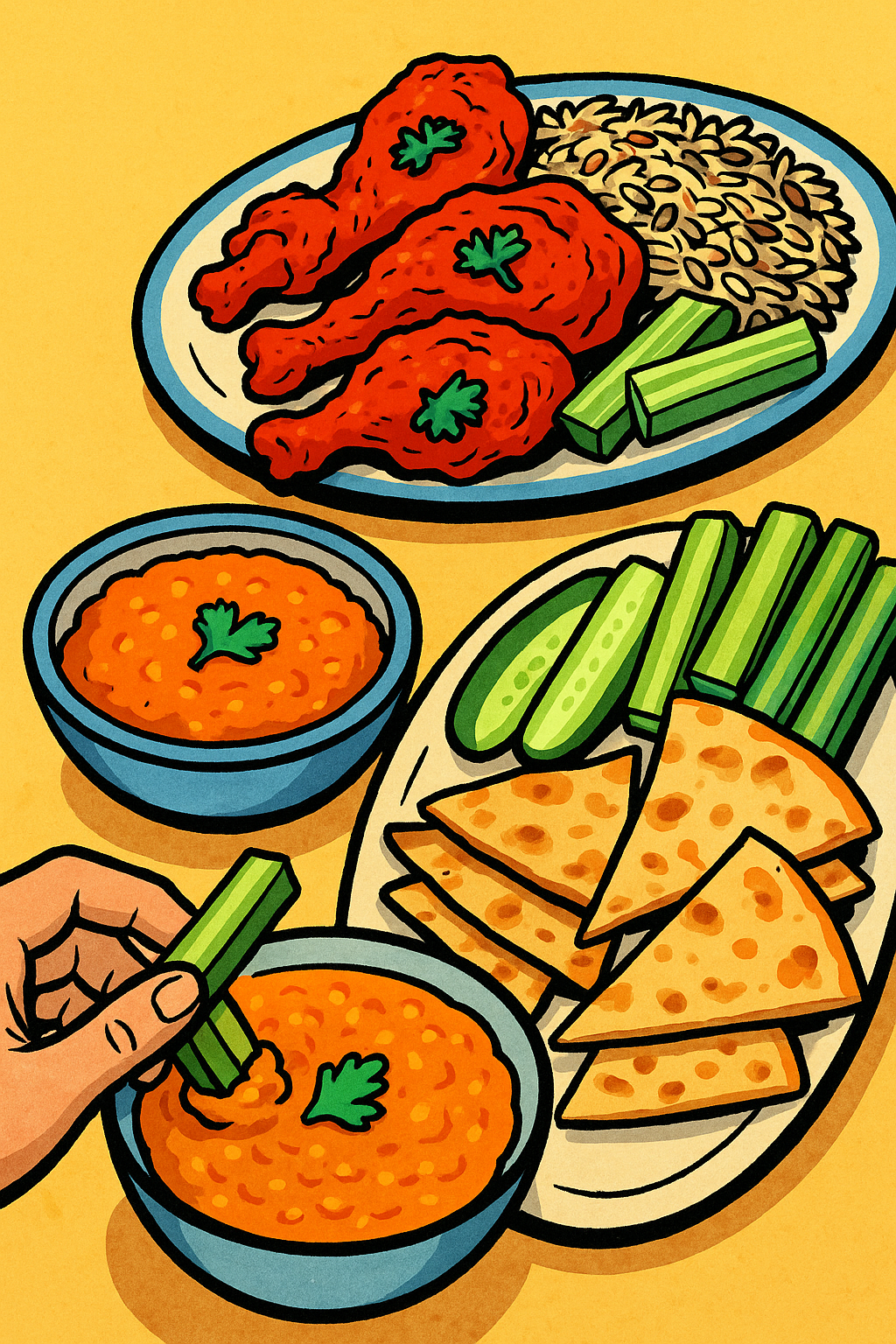
Try it with **wild or brown rice** — the powerful spices cut straight through the nutty flavour of wholegrain rice.
You can make your own, or use a ready-made dal mix — just check the label for lower salt and sugar. Many dals use coconut milk, which tastes great but is high in saturated fat. Try a lighter version made with a stir in a spoon of yoghurt or a splash of milk for creaminess instead.
Dal is versatile — serve it with tandoori chicken, or use it as a dip for celery and carrot sticks (or flatbread). Once you’ve tried it, it’s hard to go back to takeaway curry — and for most of us, it’s actually quicker to cook than wait for delivery.
Dinner 2 – Mediterranean Chicken & Veg Simmer with Quinoa:
- Heat a little olive oil in a large pan and add onion, garlic, courgette, and chopped peppers.
- Cook gently until softened, then add a tin of chopped tomatoes and a pinch of oregano or thyme.
- Simmer for about 10 minutes until the sauce thickens slightly.
- Add pieces of rotisserie chicken and stir through to warm — no need to cook from scratch.
- Serve with a side of quinoa for slow-release energy, abd add a spoon of Greek yoghurt for creaminess.
- It’s a quick, Mediterranean-style dinner that feels hearty but light — ideal for the end of a busy day.
Dinner 2 – Smoked Salmon with Barley & Citrus Salad:
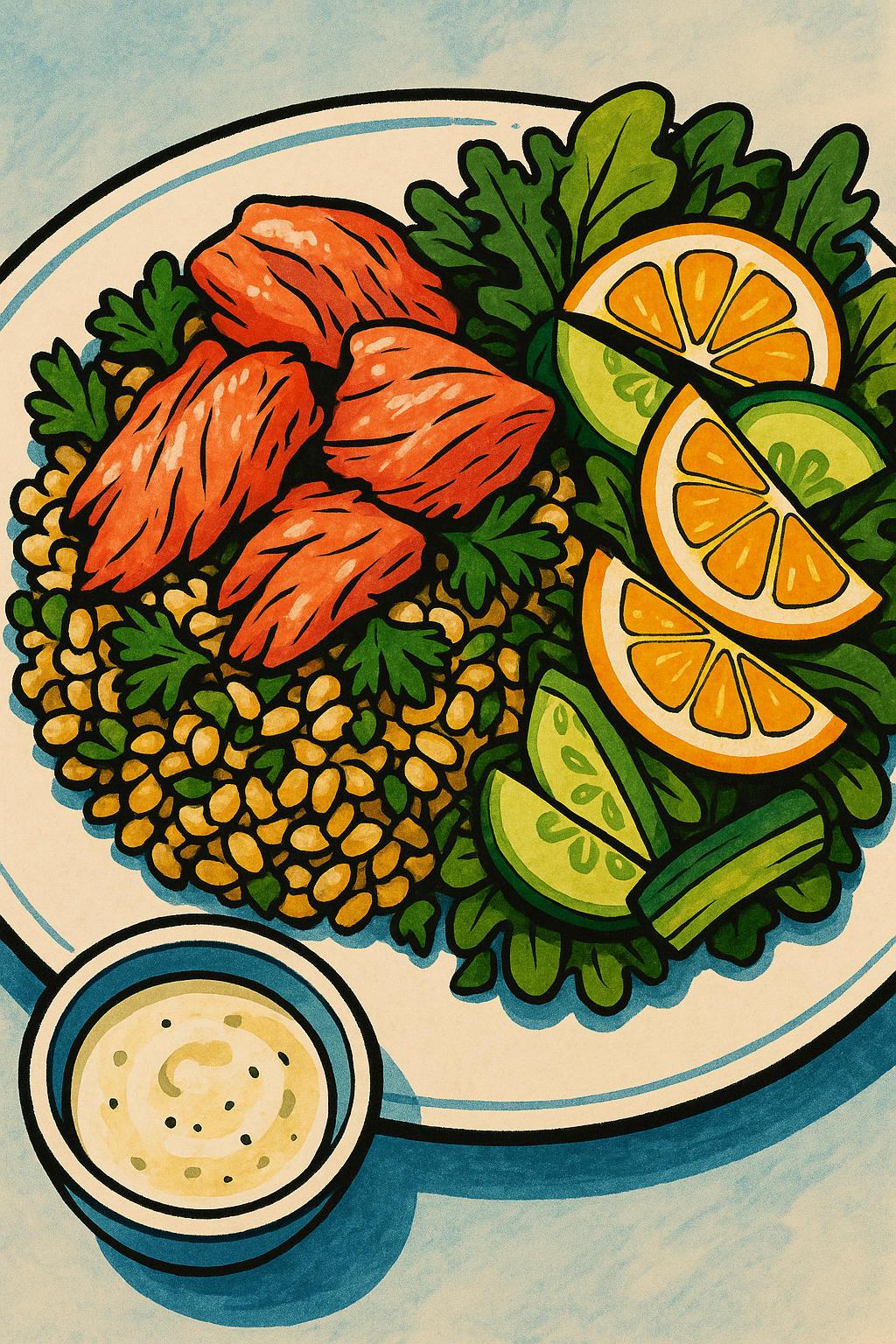
Swap the usual pasta or rice for pearl barley — it gives a gentle chew and slow, steady energy. Stir through chopped parsley and a squeeze of lemon while still warm.
Add flakes of warm smoked salmon or any leftover cooked fish, then top with a salad of citrus, cucumber, and greens for brightness.
Finish with a quick sauce: stir together plain yoghurt, mustard, olive oil, and lemon juice. Two minutes, big payoff.
It’s light, colourful, and full of textures — proving slow carbs can feel like a summer plate, not a diet plan.
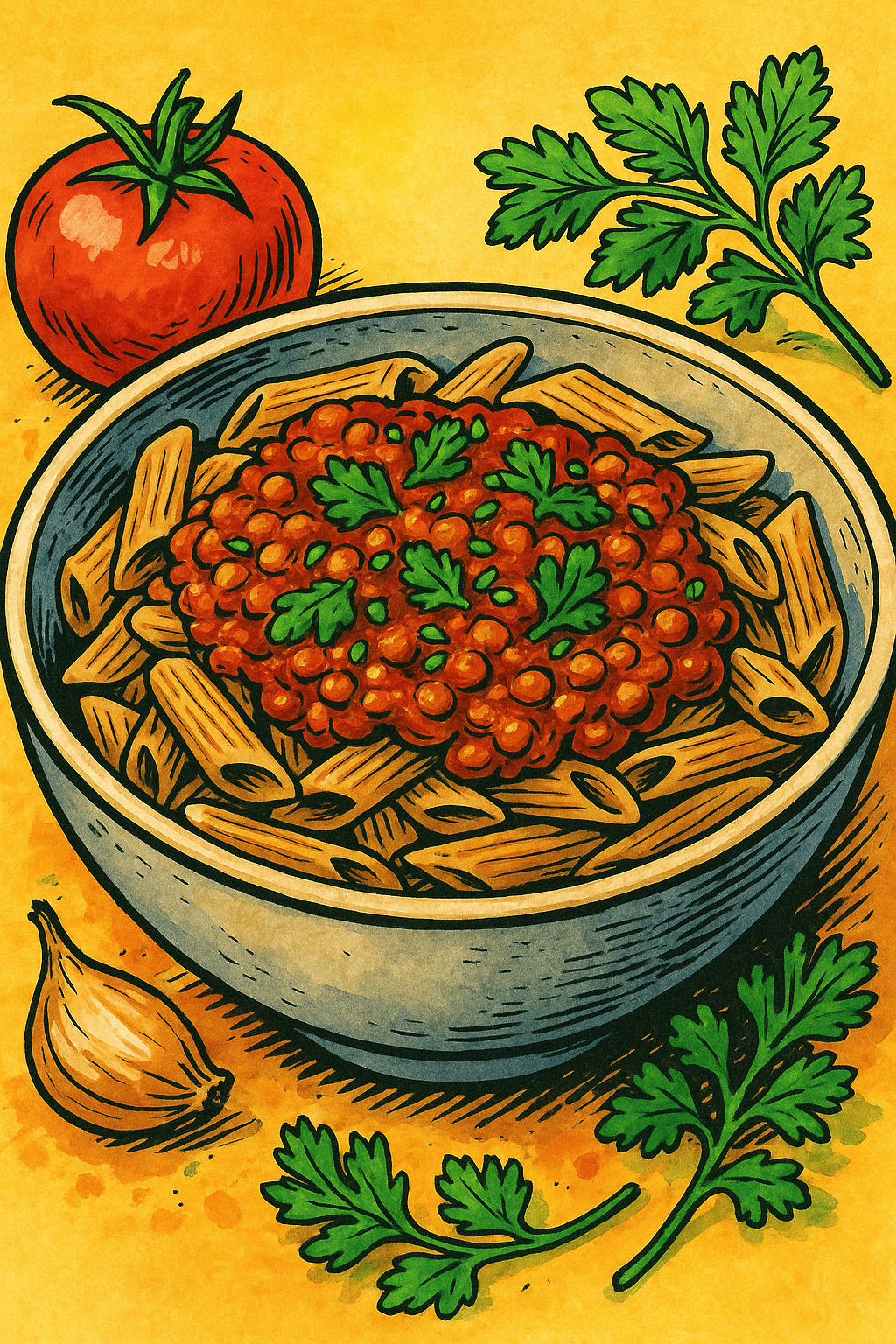
- Dinner 3 – Lentil Bolognaise with Wholegrain Pasta:
Sauté onion, carrot, celery, and garlic in olive oil until soft.
Add lentils, tinned tomatoes, and Italian herbs, then simmer until thick and rich.
Serve over wholegrain pasta, or half-and-half white and wholemeal if you’re adjusting slowly.
It’s deeply satisfying, protein-rich, and naturally high in fibre — all the comfort of a classic without the sugar hit of white pasta.
A note on swapping fast for slow
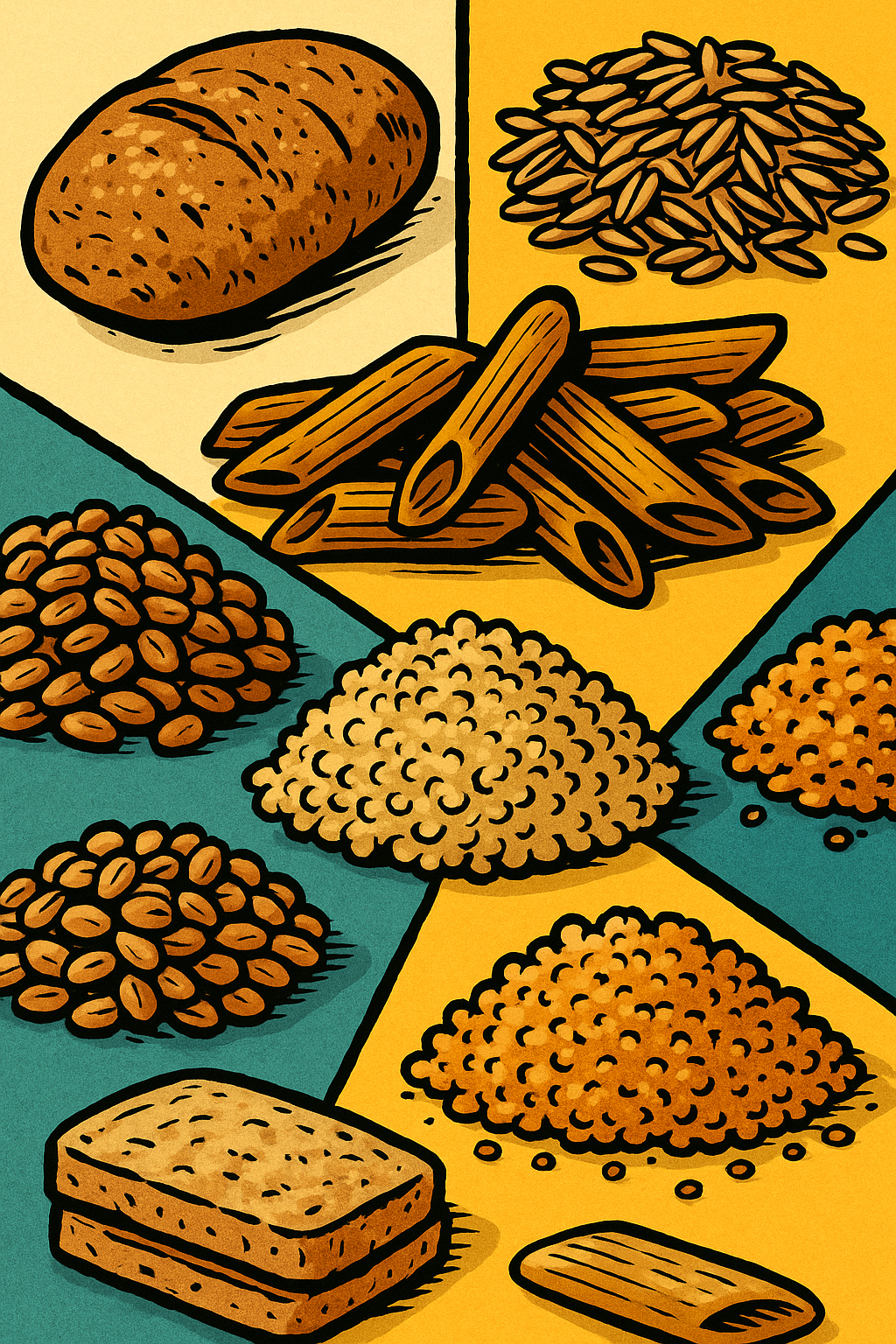
Trade white bread for a whole-grain roll or seeded loaf. Swap white rice for wild or brown rice, and regular pasta for whole-wheat or lentil pasta.
Each change slows digestion, evens out energy, and feeds your gut microbes. You don’t have to swap everything at once — try one per week.
Watch-outs
Don’t be discouraged if this feels like a step back before another leap forward. If you hit a wall, slow the pace, blend old and new foods, and remind yourself that each small change compounds over time. Consistency beats perfection every time.
Next steps
Ready for the next step?
Continue to Part 3 — Week 5 and Beyond →
Need a refresher or want to revisit earlier steps?
Go back to the 5-Week Plan Overview to see how all the parts fit together.